
Did you know green is not the only color with special meaning on St. Patrick’s Day? There are four St. Patrick’s Day colors that are deeply rooted in Irish history.
The four St. Patrick’s Day colors are green, blue, orange and white. Even though green is the most popular of the St. Patrick’s colors, the original color associated with the patron saint of Ireland, Saint Patrick, was blue!
As St. Patrick’s Day is a celebration of both Saint Patrick and Ireland, some of the St. Patrick’s Day colors tie directly to the patron saint, while others are more representative of Ireland itself.
Keep reading to learn the meanings of all the St. Patrick’s Day colors and why they are associated with this holiday.
Plus, make sure to get a free St. Patrick’s Day coloring page printable at the bottom of this post. It’s a fun activity to celebrate this day that the kids will love!

St. Patrick’s blue color meaning
In modern images of Saint Patrick, the patron saint and apostle of Ireland is shown dressed in green.
However, the earliest image of Saint Patrick shows him wearing blue robes. In this portrait, Saint Patrick is meeting the High King of Ireland, who is dressed in red.
The image appears in Legenda Aurea, a 13th century French manuscript by Jacobus de Voragine. This manuscript contains stories of many saints, including Saint Patrick.
While this is the earliest example of Saint Patrick in blue, the color blue’s connection to Saint Patrick extends further than the 13th century.

In 1783, King George III, King of Great Britain and Ireland established an order of chivalry called The Most Illustrious Order of Saint Patrick. The color chosen to represent The Order of Saint Patrick was a sky blue named St. Patrick’s blue.
Another order of chivalry called The Most Noble Order of the Garter was represented by a darker blue, so St. Patrick’s blue was chosen to differentiate The Order of Saint Patrick from The Order of The Garter.
The meaning of the color blue in Ireland
In addition to St. Patrick’s Day blue being the color of The Order of Saint Patrick, and the color in which this patron saint was first depicted, the meaning of the color blue is also tied to English rule in Ireland.
King Henry VIII of England assumed the throne in 1509. He tightened his control on Ireland in 1542 when the Irish Parliament passed the Crown of Ireland Act.
This act created the title “King of Ireland” for Henry VIII (who previously ruled as “Lord of Ireland”) and all of his successors. Ireland also changed from the “Lordship of Ireland” to the “Kingdom of Ireland”.

Henry VIII marked this occasion with a coat of arms for Ireland that used the color blue. It featured a blue background with a gold harp, which has long been a symbol of Ireland.
The design of a blue background with a golden harp can still be seen in Ireland on the presidential standard flag and the Constitution of Ireland.
The meaning of the color green
In the 18th century, tension between the British crown and the Irish Nationalists was growing. As the color blue represented the British, the color had become tainted.
This prompted a switch in favor from the color blue to green in Ireland.
Irish Nationalists were trying to distance themselves from the crown. They believed Ireland should be a sovereign entity and not under English rule.

During the Irish Rebellion of 1798, the color green became a symbol of Irish Nationalism. Irish Nationalists wore green uniforms, and Irish citizens wore green ribbons and shamrocks on their lapels to show Irish loyalty and pride.
The color blue began to fade away, and green became the color associated with Irish pride and Ireland. Images of Saint Patrick began to depict the patron saint wearing green instead of blue.
St. Patrick’s green color meaning
Irish pride and loyalty are not the only reasons you’ll see green on St. Patrick’s Day. The color green also represents Saint Patrick and the island of Ireland. It even has a special place in mythology about leprechauns.
The meaning of the color green has been tied to Saint Patrick since he came to Ireland in the 5th century as a missionary to evangelize the Irish.
During this time, he used shamrocks as a teaching tool, assigning religious meaning to each of its three leaves. The shamrock leaves represented The Father, The Son and The Holy Sprit.

The use of the shamrock in his Christian teachings linked not only the shamrock, but also the color green, to the patron saint. In images of Saint Patrick, he is often seen holding a green shamrock in one hand and a golden staff called the Bachal Isu in the other.
Learn more about the St. Patrick’s Day shamrock meaning here.
The meaning of the color green is also tied to the entire island of Ireland, which is often referred to as the Emerald Isle. The first instance of Ireland being called the Emerald Isle dates back to a poem called When Erin First Rose written in 1795 by William Drennan.
In leprechaun folklore, the color green is magical. It’s believed that if a person wears St. Patrick’s green, it will make them invisible to leprechauns. This is a good thing, because lore says leprechauns pinch anyone they can see.
If you’re interested in learning more about leprechauns, make sure to check out these leprechaun facts.
Irish flag colors meaning
Green also has special meaning as one of the colors of the Irish flag. This tricolor flag has three pales of equal size in the colors green, white and orange. The green pale on the Irish flag goes next to the flagstaff.
Each of the Irish flag colors have religious symbolism. Green represents the dominant Catholic population in Ireland, orange represents the Protestant minority and white represents hope for lasting peace between the two.
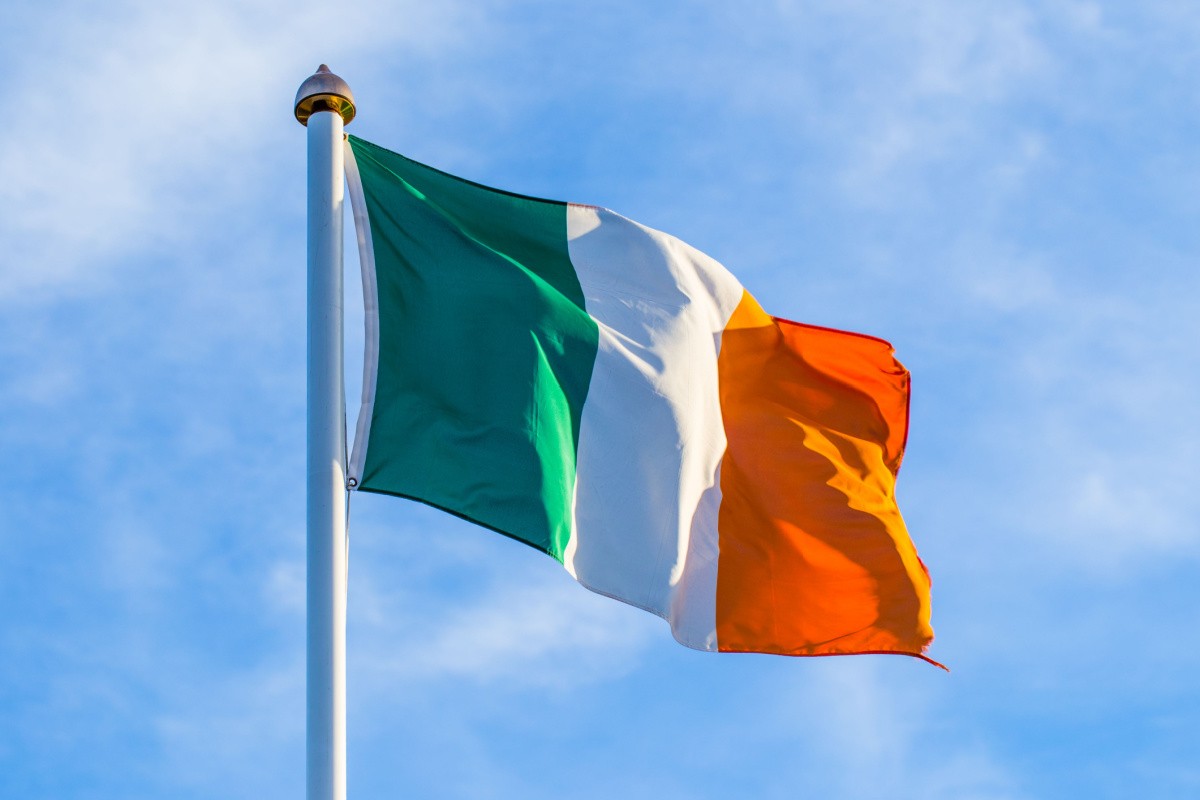
The color orange was chosen to represent the Protestants because they were supporters of King William III of England, Ireland and Scotland, also known as William of Orange. As a staunch Protestant himself, he became an important Protestant figure.
The word “Orange” in his title refers not to a color, but to a location. William of Orange was born as the Prince of Orange, a principality located in what is now southern France.
The National Flag of Ireland (often referred to as the Irish Tricolor) was first flown on March of 1848. It was also flown again at the General Post Office (GPO) in Dublin during the Easter Rising of 1916.
After this, the Irish Tricolor was adopted as the flag of the Irish Free State in 1922. It was then confirmed as the official flag of Ireland in the 1937 Constitution of Ireland.

White and orange color meanings on St. Patrick’s Day
Many of the St. Patrick’s Day colors and symbols seen on March 17th celebrate more than just Saint Patrick. After all, St. Patrick’s Day isn’t just about the patron saint, it’s also about Irish pride.
While you won’t likely see white and orange on St. Patrick’s Day in the same frequency that you’ll see green during this holiday celebration, orange and white are still important St. Patrick’s Day colors.
You’ll most likely see green, orange and white together on the Irish flag, as the Irish flag colors are an important symbol of hope for peace and a unity between the people of Ireland.
Wearing green on St. Patrick’s Day
It’s no secret that the most popular of St. Patrick’s Day colors is green. So go ahead and wear St. Patrick’s Day green this March 17th!

No matter why you choose to wear green, to escape pinching, to be invisible to leprechauns, to show Irish loyalty and pride, to honor the religious history of Ireland, as an homage to the Emerald Isle, or just for fun, you certainly won’t be alone.
With all these St. Patricks green color meanings, you’ll see the hue in more than just clothing. It’s also in pints of beer, holiday decorations, and even the Chicago river, which as been dyed green since 1962.
If you want a recipe for a green drink that’s not beer, check out this one for green St. Patrick’s Day mimosas.
It is present in images of leprechauns and Saint Patrick. You’ll see it during St. Patrick’s Day parades where people wear shamrocks wave Irish flags.
Now that you know the history of wearing green on St. Patrick’s Day, you can wear it with pride!
How to celebrate the St. Patrick’s Day colors
It’s time to celebrate the St. Patrick’s Day colors now that you understand their meanings. The most obvious way to celebrate is by wearing green on St. Patrick’s Day, but below we’ve got a few more suggestions.

Some of the links below are affiliate links. I earn a small commission, at no extra cost to you if you purchase through an affiliate link.
- See which St. Patrick’s Day colors you can locate in our free St. Patrick’s Day word search.
- Go out to bar and ask your bartender if they’re serving green beer this St. Paddy’s Day.
- Download a free St. Patrick’s Day crossword puzzle and see how many colors of St. Patrick’s Day are in it.
- Try making a DIY St. Patrick’s Day door wreath featuring a leprechaun hat and flowers to welcome your guests in style.
- Get a free old Irish blessing printable with green lettering to display in your home.
- Buy some fun shamrock window stickers to put on your windows this year.
- Make a St. Patrick’s Day banner using all of the St. Patrick’s Day colors.
- See which of the St. Patrick’s Day colors you can unscramble in our St. Patrick’s Day word scramble printable.
- Check out these St. Patrick’s Day quotes and graphics. Many of the messages are on background with St. Patrick’s colors!
- Drink your coffee out of an Irish flag mug now that you know the colors of the Irish flag meanings.
- Click here to get a free St. Patrick’s Day coloring page printable (or you can stroll to the bottom of this post and print it from the project card). You can either give it to your children, or be like a kid again and color it yourself!
- Try making some of the St Patrick’s crafts and St Patrick’s recipes below.
- Decorate your home by making a leprechaun hat floral centerpiece.
If you enjoyed learning the meaning of the color orange, green, white and blue for St. Patrick’s Day make sure to check out these other holiday color guides: Valentine’s Day colors and Mardi Gras colors.
Share this post explaining the St. Patrick’s colors with your friends on X:
If you enjoyed learning the meaning and history of the four St. Patrick’s Day colors, don’t forget to share this post with your friends.
Find out the meaning of the color green and the significance of all the other St. Patrick's Day colors at Always the Holidays! ☘️🇮🇪 #StPatricksDayColors #GreenColorMeaning Share on XPin this post on the four St. Patrick’s Day colors for later
Would you like a reminder of this post explaining the St. Patrick’s colors, their meanings and history? Just pin this image to one of your trivia boards on Pinterest so that you can easily find it later.

St. Patrick's Day Coloring Page

Celebrate St. Patrick's Day this year with a free St Patrick's Day coloring page printable.
You can use colored pencils, crayons or markers to fill complete this free printable.
Many of the items you will see in this St. Patrick's Day coloring sheet are symbols of the holiday, like shamrocks, leprechauns and the harp!
You can color this printable coloring page with any colors you like! We recommend using the St Patricks Day colors: blue, green, orange and white!
Materials
- Computer paper
- Colored pencils
Tools
- Computer
- Printer
Instructions
- Load your computer paper into your Deskjet printer.
- Choose portrait layout and if possible "fit to page" in your settings.
- Print the free St. Patrick's Day coloring page.
- Using colored pencils, markers or crayons, color this St. Patrick's Day coloring sheet printable using any colors you like!
Notes
Using this print function on this card will make a St. Patrick's Day printable coloring page that fills about ¾ of an 8 x 11 sheet of paper.
To fill the entire page, choose "fit to page" on your printer if you have this setting, or use the link in the post above and print using the browser print feature.

Recommended Products
As an Amazon Associate and member of other affiliate programs, I earn from qualifying purchases.


